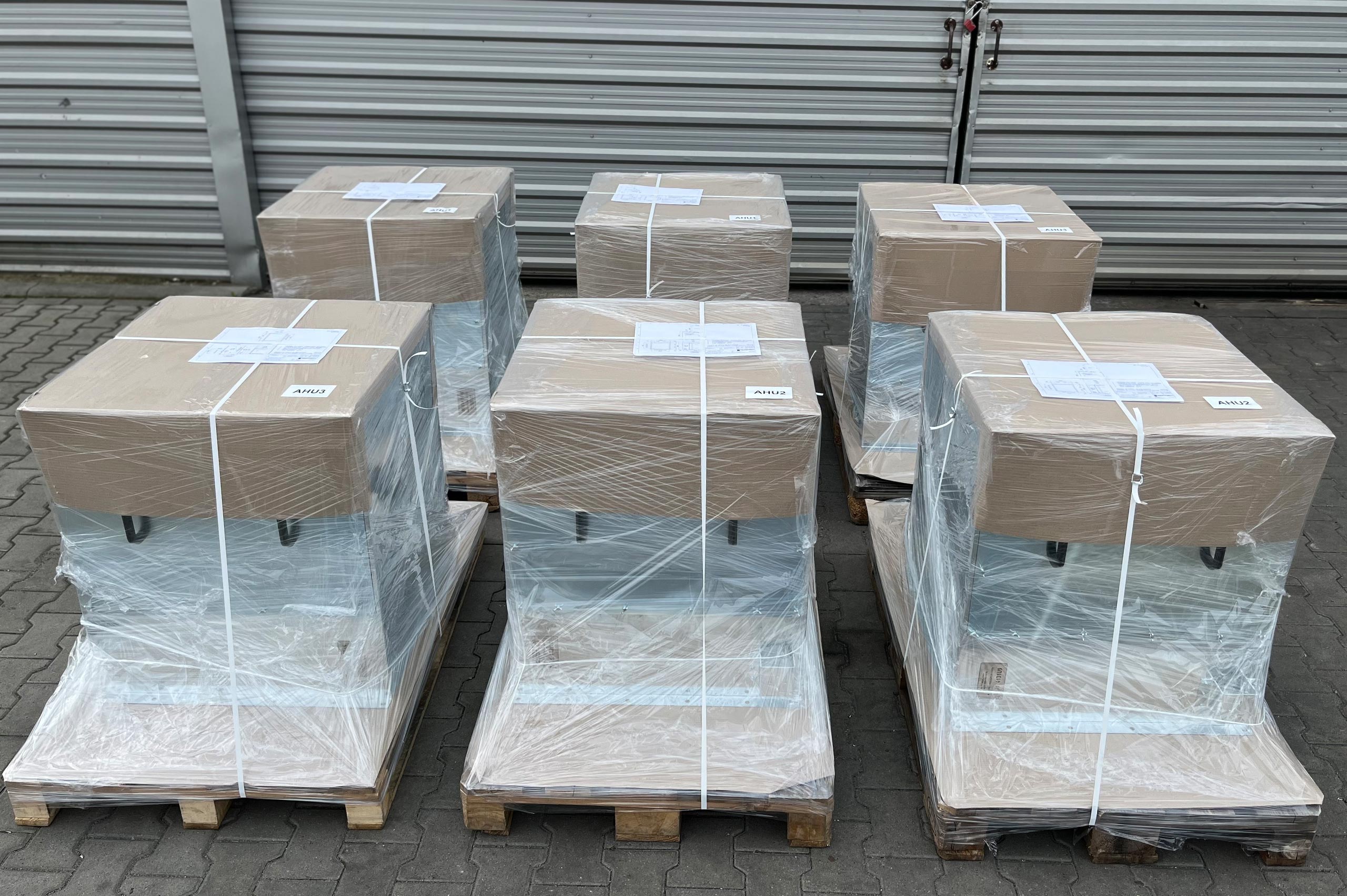
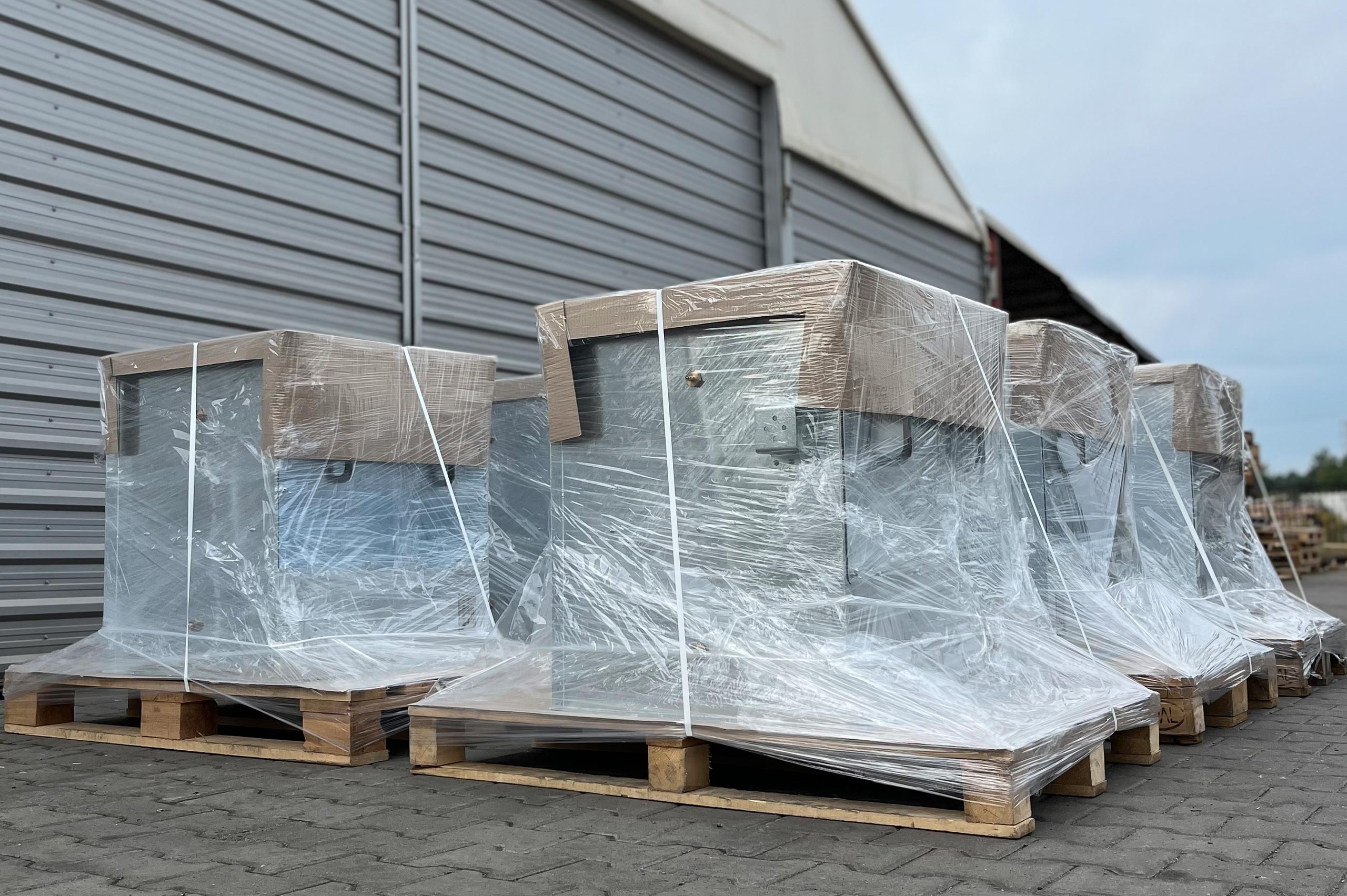
It’s summertime, but at Sedina-HVAC we are running at full speed. Even while many companies slow down for holiday breaks, our team is on fire – delivering projects on time and meeting every customer’s expectation. Recently, we completed another successful delivery: advanced activated carbon filters for a naval HVAC system.
05
wrz
Carbon Filters with Granulated Activated Carbon Panels for the Naval Industry
Why Carbon Filters Matter in Marine HVAC
Filtration is a critical part of every HVAC installation. In the marine and offshore sectors, it goes beyond comfort – it’s about protecting people, equipment, and processes. Activated carbon filters are specifically designed for odor removal and deodorization in:
• Air conditioning and ventilation systems,
• Kitchen installations,
• Paint shops,
• Industrial facilities.
They purify the air by capturing solvents, hydrocarbons, and volatile organic compounds (VOCs). They also help eliminate dangerous gases, supporting processes such as exhaust gas desulfurization and the removal of dioxins, mercury, and other harmful pollutants.
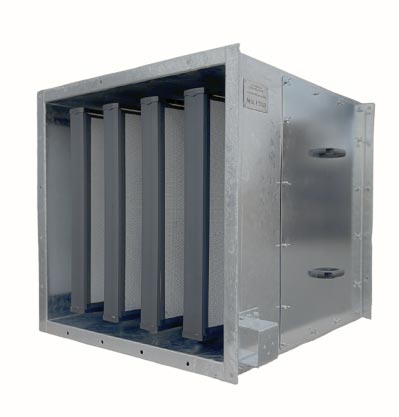
For this naval application, we supplied carbon filters with zinc-plated steel housings, designed to withstand marine environments. Depending on customer requirements, housings can also be manufactured in powder-coated finishes or in stainless steel AISI 304/316L, ensuring resistance to corrosion in coastal and offshore conditions.
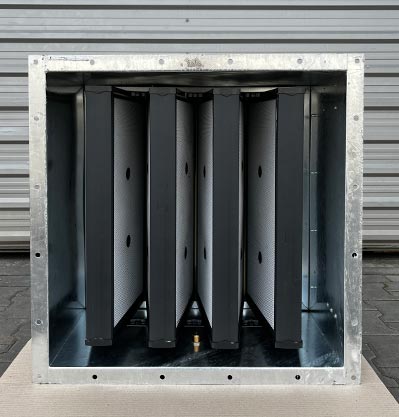
Each filter is tailored to the airflow requirements of the duct system. In this case:
• Air flow capacity: 2400 m³/h,
• Initial pressure drop: 150 Pa,
• Filter media: granulated activated carbon panels.
To enhance reliability, the installation was equipped with a smart differential pressure transmitter, which continuously monitors the pressure drop and signals when the filter needs replacement or cleaning.
Technical Strengths of Carbon Filters
The filters we deliver offer:
• High efficiency in odor and gas removal,
• Durable galvanized steel cassettes with reinforced plastic frames,
• Long filter lifespan and low energy costs,
• Certified performance (Hygienic Certificate issued by the National Institute of Hygiene).
It is important to note that these filters are not recommended for use in high temperature or humidity environments, where sorption capacity decreases.
Conclusion
Activated carbon filters are a small but essential part of marine HVAC systems. They protect sensitive equipment, ensure a safer environment for the crew, and meet the strict requirements of modern naval and offshore projects.
At Sedina-HVAC, we combine proven products with tailored engineering solutions – from material selection to monitoring systems – to deliver reliable performance in every project.